
ELAH · 120MM INTERCEPTOR · C-UAS
M120. Air defense.
A counter-drone interceptor that arrives as ammunition, using legacy systems to increase warfighter capability.
Read the concept briefCTG, 120MM, INTERCEPTOR, DAVID · OAL 711 MM · CAL 120 MM
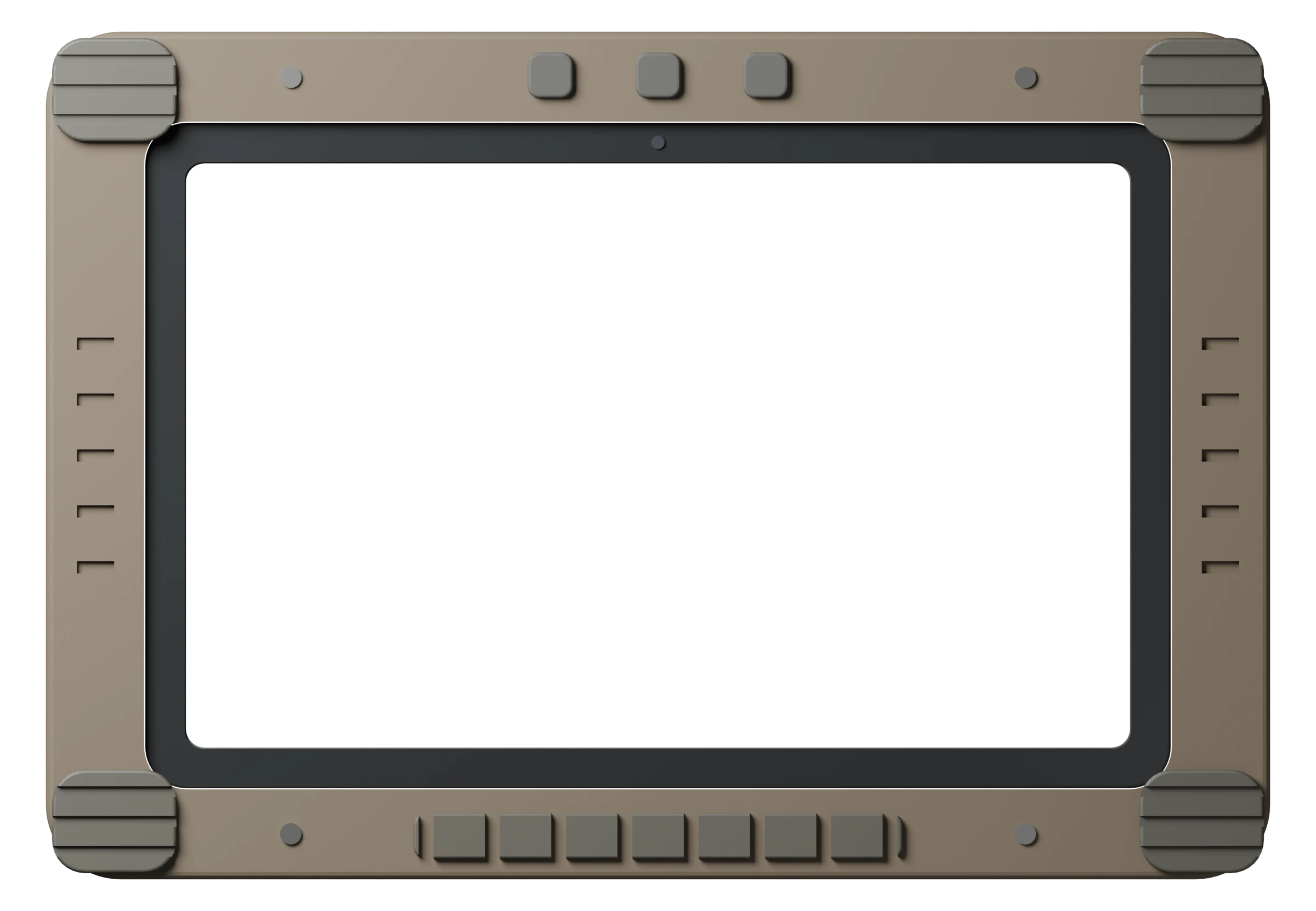
Today’s situation
Threat inbound.
ENEMY UAS INBOUND · GRID 11S MC 8421 3396
This is a normal morning on 2030’s battlefield.
Today’s drill
Grab as much as you can and take cover.
Hope that there is an active C-UAS system to deal with the threat.
What happens:
- Damage to equipment
- Potential casualties
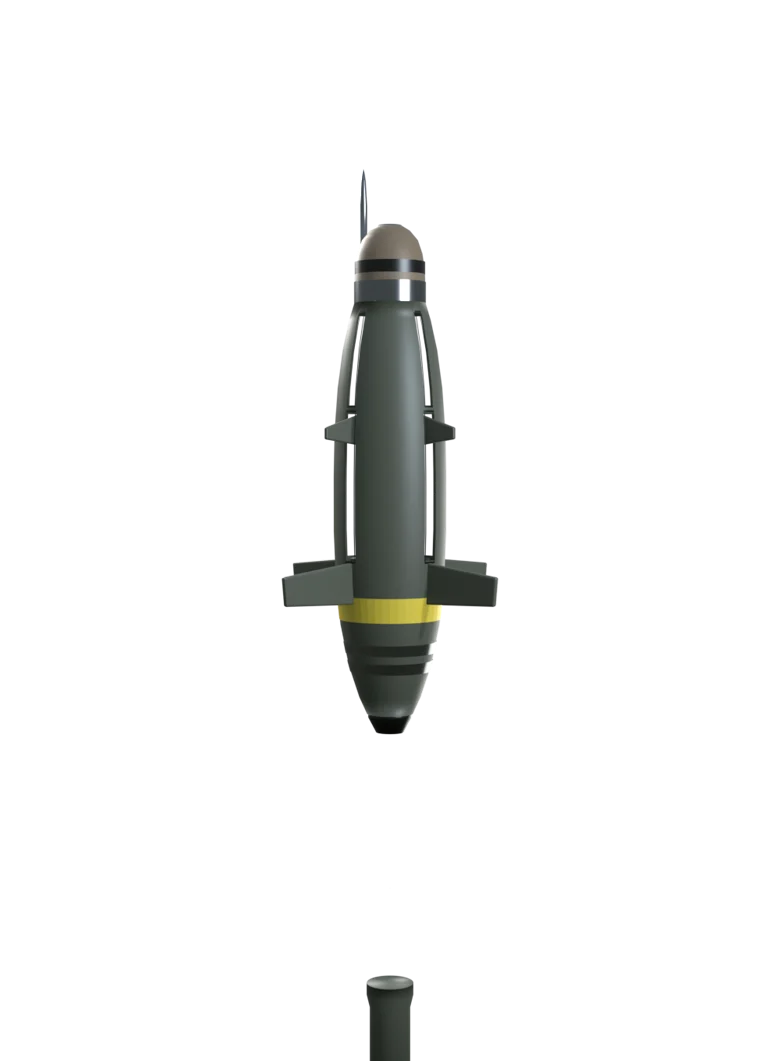
It leaves as
ammunition.
It arrives as
an interceptor.
- 01 Increments burn off
- 02 Boom and tail array separate
- 03 Nozzle uncovered
- 04 Fins and canards snap out
- 05 Target locked
GUIDANCE
Nothing to jam.
A passive infrared seeker finds the target. A 77 GHz radar wakes for the last second and fires the fuze. The round carries no receiver, no datalink and no GPS.
- Seeker
- Uncooled LWIR microbolometer
- Fuzing
- 77 GHz mmWave impact & proximity fuze
- Warhead
- 0.5 to 1.5 kg preformed fragmentation
- Propulsion
- Expendable micro turbojet
- Targeting
- Infrared & radar probe antenna
- Control
- Maneuverable aero

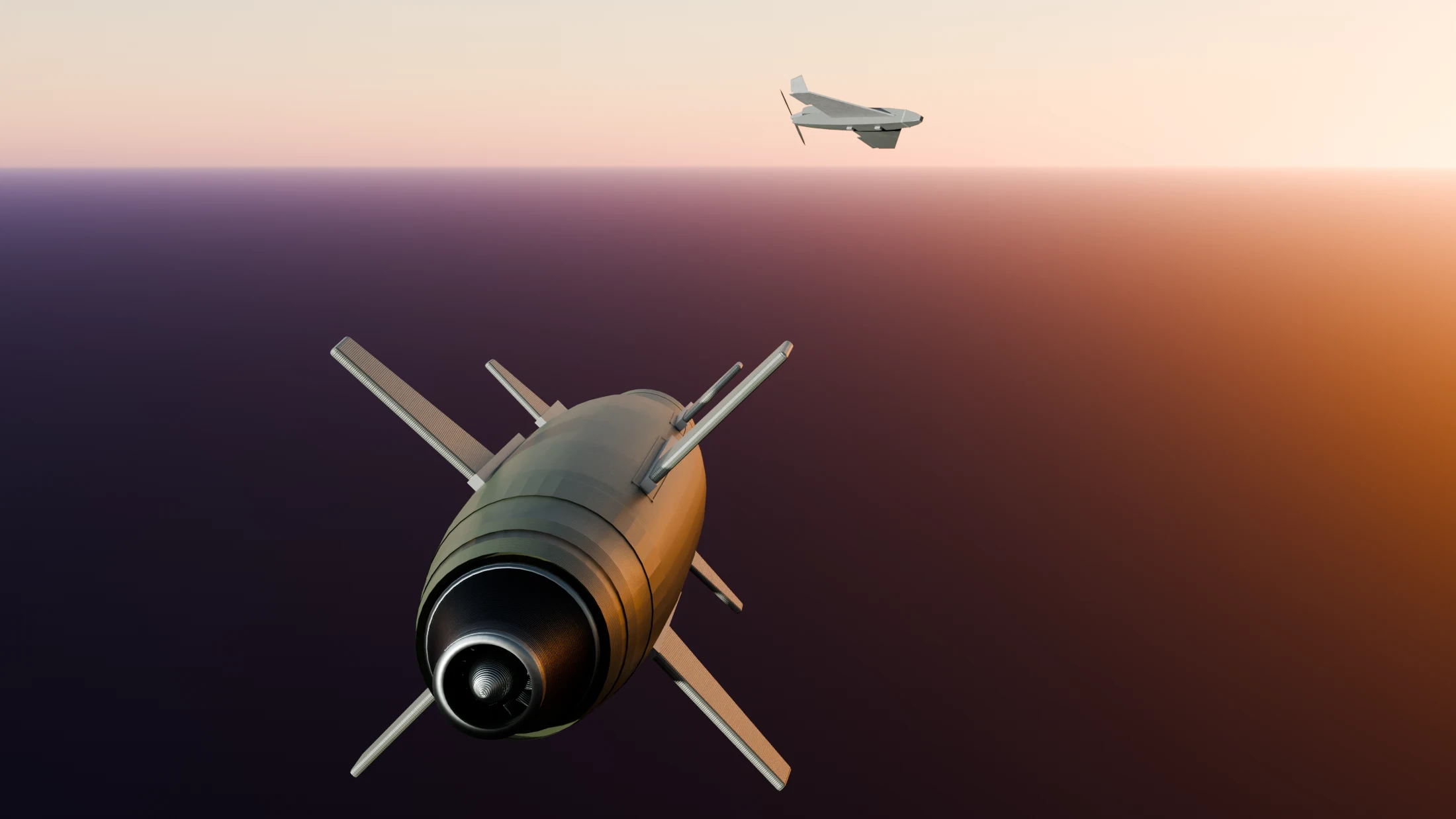
Tomorrow’s drill
Stay on the gun.
The same tube. The same crew. The same drill they already know.
Same round. New effects.
Created for the gun section that is already employed in the battlefield.
Unit cost, and what it buys
The Army paid $24,469 for the same round that simply “improved accuracy.”
| Effector | Unit cost | Launch system | What it can reach |
|---|---|---|---|
| M934 120mm HE | $2,000 | M120 | Ground |
| XM395 APMI, GPS guided 120mm | $24,469 | M120 | Ground, accurately |
| DAVID, this concept | $25,000 | M120 | Air |
| Coyote Block 2 | $125,000 | LIDS launcher and KuRFS radar | Air |
| Patriot interceptor | $4,000,000 | M901 launching station | Air |
Same tube. Same crew. Same money. This one goes up.
AMMUNITION DATA CARD
Notional Specifications
Nothing here has been built and nothing has flown. Every figure is a design target, derived from the M934 envelope, the M120 firing table and parts that can be bought today. The sources are at the foot of the page.
Identification
- Nomenclature
- CARTRIDGE, 120MM: INTERCEPTOR, GUIDED, DAVID
- NSN
- 1315‑01‑___‑____
- DODIC
- PENDING · assigned by the US Government. M933 is C623, M934 is C379.
- Colour code
- Olive drab body, yellow band, white stencil, per MIL‑STD‑709D
- Hazard classification
- UN 0321, 1.2E provisional. Onboard fuel drives its own IM series.
- Packing
- Four rounds, sealed container, 68 kg gross
Physical
- Calibre
- 120 mm, smoothbore, muzzle loaded
- Overall length
- 711 mm. The M934 envelope, unchanged.
- All up weight
- 14.6 kg
- Weight after separation
- 12.3 kg
- Span
- 120 mm stowed, 410 mm across the deployed fins
Launch
- Weapon
- M120 and M121, no modification. M326 stowage compatible.
- Charge
- Increment 2. Increments 3 and 4 are not authorised.
- Muzzle velocity
- 165 m/s at +21 °C
- Elevation
- 1,100 to 1,500 mils (62 to 85 degrees)
- Setback
- 10,000 g peak, about 12 ms
- Boom separation
- T + 2.4 s, about 360 m above the tube
- Turbine light off
- T + 2.9 s. Gas generator spins the spool; no starter motor.
Propulsion and control
- Propulsion
- Single spool turbojet, 100 N class, 97 mm diameter
- Fuel
- 0.95 L JP‑8 with 5 % turbine oil
- Endurance
- About 150 s at maximum thrust
- Speed
- 230 m/s level at 3,000 m, thrust limited
- Control
- Four canards, ±18°, electromechanical actuators
- Manoeuvre
- 10 g commanded, 14 g structural
- Guidance
- Proportional navigation, N = 4
- Navigation
- MEMS inertial, 10 °/hr bias. No GNSS.
- Power
- Thermal battery, 28 V, 180 s
Seeker and effect
- Seeker
- Uncooled LWIR microbolometer, 640 × 512 at 12 µm, 60 Hz, 24° field
- Acquisition
- About 2,500 m against a Group 3 airframe
- Terminal radar
- 77 to 81 GHz FMCW, 4 GHz sweep, 3.8 cm range resolution
- Fuzing
- Impact and radar proximity. Two environment safe and arm, MIL‑STD‑1316.
- Warhead
- 1.2 kg preformed fragmentation, PBXN‑109, about 600 tungsten cubes at 4 mm
- Emission
- The seeker is passive. The radar is the only emitter and it wakes for the last two seconds.
Engagement and service
- Envelope
- 1,000 to 5,000 m slant
- Time to intercept
- 6 to 30 s from the tube
- Target set
- UAS Groups 1 to 3. Not 4. Not 5.
- Storage life
- 20 years, no periodic maintenance
- Temperature
- −46 to +71 °C stored, −32 to +49 °C fired
- Unit cost at rate
- $25,000 target, at 10,000 rounds a year
Two rows here carry the risk, and neither one of them is the cost. The seeker finds a Group 3 airframe at about 2,500 m and the envelope is written to 5,000: the difference is the platoon’s own counter battery radar putting the round in the basket, and without that handoff this is a short range weapon that has to be pointed. The other is the charge restriction. Increments 3 and 4 are withheld not for range but because a turbine spool, a thermal battery and a microbolometer all have to come through 10,000 g still working, and that is a rig test, not a drawing. Everything else on this card is arithmetic off an envelope the M934 already occupies.
Start the conversation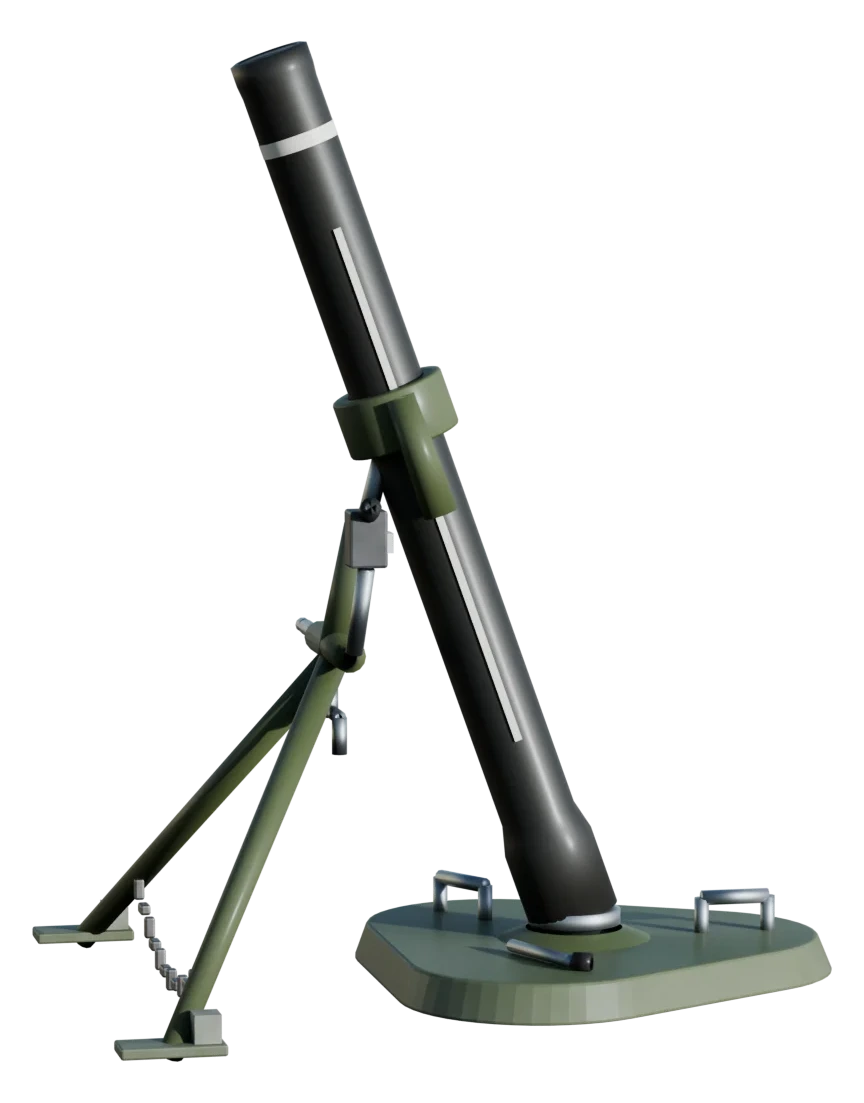
The M120 is a system used for generations and generations to come.
Fielded in 1991 and still the battalion’s heaviest organic fire. Every round on the card above is fired from this, unmodified.